
BUILT FOR LONG DAYS
Long shifts make hydration easy to postpone. Keep a portable, low-sugar option within reach when heat, effort or limited breaks raise the practical demand.
Low sugar, on purpose.
Purposeful Sodium: 701 mg / 500 mL.
Tastes great. Not too sweet.
32 servings.
Free & Fast Delivery.
Hydration During Long Winter Workdays
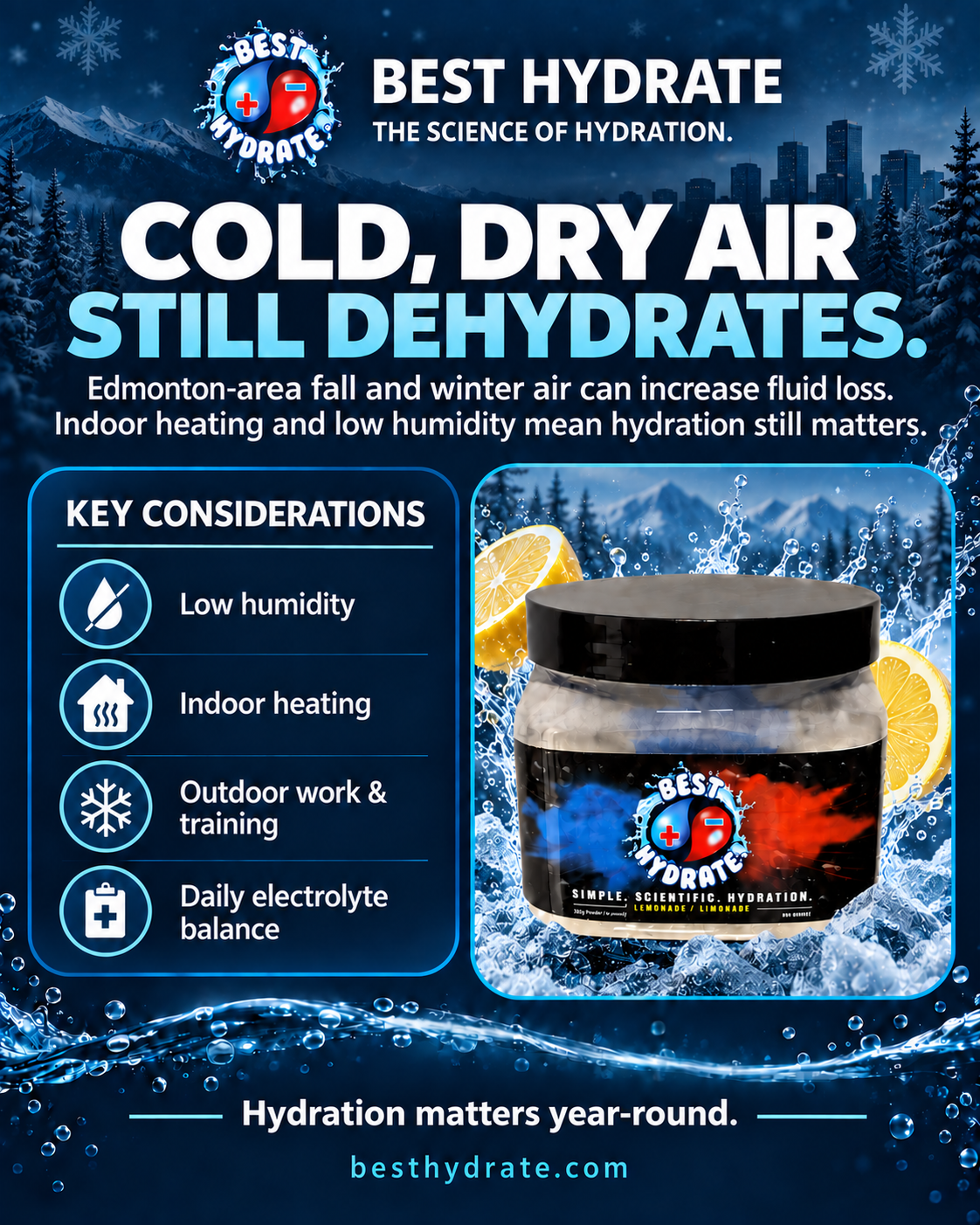
Long winter workdays can hide hydration demands. Cold conditions may make thirst feel less obvious, while physical work, layered clothing, dry air and heated indoor spaces can still create fluid losses across a full shift. The challenge is often maintaining a routine when the usual summer cues are weaker.
The story
Winter work adds its own constraints
A worker may move repeatedly between cold outdoor conditions and warm indoor spaces, sweat under protective layers or have only limited opportunities to drink. A practical plan has to fit the actual break schedule, work environment and access to refill points.
- Cold conditions can make thirst and sweat less noticeable.
- Physical work and layered clothing can still increase fluid losses.
- Fluids need to fit the break schedule and access available across the shift.
Preparation helps. Keeping a bottle where it will not freeze, using normal meal breaks as hydration checkpoints and having a refill plan can make the routine easier to repeat. Some people may also find room-temperature or warm fluids more appealing than very cold drinks during winter work.
Electrolytes are a context-dependent option, not a requirement for cold weather itself. They become more relevant when work is prolonged, physically demanding or produces meaningful sweat loss. Ordinary meals continue to provide fluid and electrolytes too, so the whole workday matters more than any single beverage.
Best Hydrate can fit as a portable electrolyte option on demanding winter shifts, but it is not a substitute for access to water, food, breaks or appropriate workplace heat and cold controls. The useful approach is not a fixed winter target. It is a repeatable routine that matches the shift, the clothing, the environment and the individual.
Workers can also build the routine around what already happens. A start-of-shift bottle, a refill at lunch and a drink during scheduled breaks may be easier to maintain than an elaborate timetable. Simple systems are more likely to survive a busy day, especially when weather, workload and access are constantly changing.
Want the deeper explanation?
LOW-SUGAR HYDRATION
LOW SUGAR HITS THE HYDRATION SWEET SPOT.
~1 g of sugar per 100 mL prepared. Best Hydrate keeps a small amount of purposeful glucose in the formula for sodium-glucose transport while avoiding a conventional high-sugar load.
Purposeful glucose. Not zero. Not overloaded.
~1 gsugar / 100 mL
SGLT1sodium + glucose transport
5electrolytes
MADE TO KEEP DRINKING
Tastes great. Not too sweet.
A lighter-tasting electrolyte mix for the moments when a prepared hydration option fits your day.
PREPStart with a plan that fits the day.
→
PERFORMKeep fluid access practical.
→
RECOVERReturn to your normal routine.
THE HYDRATION MIDDLE
Not zero. Not overloaded.
Quick answers
Is it very sweet?
No. Best Hydrate is designed to taste great without the heavy sweetness of many traditional sports drinks.
When can I use it?
Use it when a prepared electrolyte drink fits the activity, conditions and routine. PREP → PERFORM → RECOVER is the simple framework.
Is the container portable?
Yes. The compact powder container is easy to keep in your bag so your hydration routine can travel with you.
READY FOR YOUR BEST DAY?
Hydrate for YOUR Best Day!
32 servings per container. Free & Fast Delivery where available.
Shop Best Hydrate